
Part One of a Multi-Part Lecture Series on Limb Loss
On-Demand
2.00 CEU Contact Hours
Available On-Demand until 12/10/2028 (ANCC, ACE, CME)
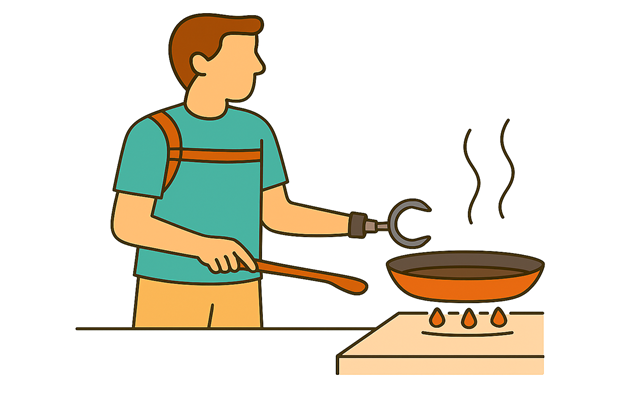
Many functional tasks essential for independent living require the use of both hands. Individuals with upper limb absence (ULA) face challenges completing these tasks and experience secondary conditions such as pain, overuse, and social isolation. This course highlights one-handed adaptive techniques and prosthetic strategies to support safe, independent function and a return to leisure activities.
For those who cannot attend the live class, an on-demand version will be available following the class.
Continuing Education Credits Anticipated: ACE (SW), ANCC (Nursing/NP), APTA (PT), AOTA (OT), BOC (AT), CME (MD/PA)
Pricing
MGB Employees: Free with coupon code and proof of MGB User ID
Click here for coupon code
Non MGB Employees: $50.00
Learning Outcomes – Following this course, participants will be able to:
- Define at least three types of upper limb prostheses.
- Describe at least three components of skills drills, splinter skills and functional sequence.
- Identify at least one method of completing basic self-care tasks for each of the following conditions: using one hand, with a prosthesis and utilizing adaptive strategies.
- Identify at least two methods of completing IADL tasks using one hand and a prosthesis.
- Describe at least two ways the PEOP model can facilitate/enhance interventions in prosthesis use.
Time-Ordered Agenda
- 5-minutes: Introduction
- 10-minutes: Levels of upper limb absence
- 15-minutes: Types of prosthetic technology
- 10-minutes: Phases of care
- 10-minutes: Prosthetic Training
- 5-minutes: Interventions, including skills drills, splinter skills and functional sequences with and without the prosthesis
- 20-minutes: Return to Daily and Leisure Activities
- 30-minutes: Case Studies
- 15-minutes: Summary and Q&A
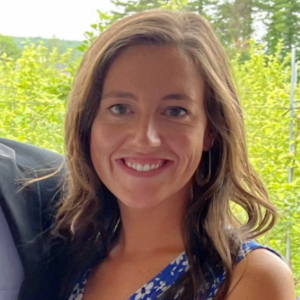
Laura Gosselin, OTR/L is an Occupational Therapist and the Upper Limb Coordinator for the Amputee Center of Excellence at Spaulding Rehabilitation Hospital. She actively participates in the outpatient limb loss clinic, providing evidence-informed care for individuals with upper limb absence, with an emphasis on adaptive strategies and functional outcomes. In her role, Laura connects patients to relevant research opportunities, supports community outreach to expand access to specialized upper limb care, and contributes to the development and standardization of best practices in pre-prosthetic intervention and prosthetic training across the hospital system. She has extensive clinical experience from inpatient rehabilitation and acute care settings, including work with individuals following amputations, burn injuries, and complex trauma. Laura is a member of the Amputee Special Interest Group, and has teaching experience as a lab instructor at MGH IHP and as a co-lecturer at Tufts University
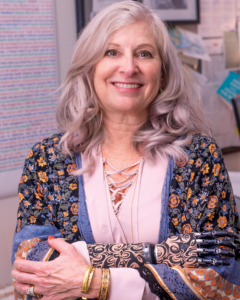
Debra Latour, OT, OTD, M.Ed., OTR, FAOTA is Consultant and Owner of Single-Handed Solutions, LLC, providing consulting services to manufacturers and clinical practitioners. She offers direct treatment to individuals with upper limb loss/difference through her affiliations with Handspring Clinical Services. Debi has been active in the Amputee Coalition and is a member of AAOP, ATA, MAOT and AOTA. Debi has a congenital upper limb difference, is an active prosthesis-user and shares her experiences and tips through her blog and on YouTube. She is the author of copyrighted prosthetic rehabilitation educational materials, textbook chapters and has produced training videos and webinars through OT.com and Medbridge. Debi is the inventor of record of prosthetic technology including the Cutaneous Anchor Technology (patented) and the TAB (patent-pending).
Target Audience: Athletic Trainers, Nurses, NPs, Occupational Therapists, Physical Therapists, Physicians, PAs, Social Workers
Instructional Level: Introductory
Prerequisites: None
Cancellation Policy: Spaulding reserves the right to adjust components of this program or to cancel the program for unexpected occurrences. Notice of changes or cancellation will be provided expediently. Upon cancellation of a course, a refund for the price paid for the course will be given. A processing fee of $10 may be charged when the registrant provides written notice of cancellation of their attendance less than 7 business days prior to the program date. Tuition is non-refundable if the registrant does not provide notice of cancellation at least 7 days prior to the program date. Spaulding apologizes but will not be responsible for inconveniences incurred due to program changes. After purchase, this course must be completed by the expiration date. Refunds cannot be issued if the course is not completed by the deadline.
Speaker Disclosures: Laura Gosselin is a salaried employee of MGB. She has no other financial or non-financial disclosures to share. Debra Latour is a consultant for Fillauer-TRS and the owner of Single-Handed Solutions, LLC. All financial relationships listed for these individuals have been mitigated.

As a Jointly Accredited Organization, MGH Institute of Health Professions is approved to offer social work continuing education by the Association of Social Work Boards (ASWB) Approved Continuing Education (ACE) program. Organizations, not individual courses, are approved under this program. State and provincial regulatory boards have the final authority to determine whether an individual course may be accepted for continuing education credit. MGH Institute of Health Professions maintains responsibility for this course. Social workers completing this course receive 2.0 clock hours for continuing education credits.

In support of improving patient care, MGH Institute of Health Professions is jointly accredited by the Accreditation Council for Continuing Medical Education (ACCME), the Accreditation Council for Pharmacy Education (ACPE), and the American Nurses Credentialing Center (ANCC) to provide continuing education for the healthcare team. Physicians: MGH Institute of Health Professions designates this live activity for a maximum of 2.0 AMA PRA Category 1 Credits ™. Physicians: MGH Institute of Health Professions designates this live activity for a maximum of 2.0
AMA PRA Category 1 Credits ™. Physicians should claim only credit commensurate with the extent of their participation in this activity.
Nurses: MGH Institute of Health Professions designates this activity for 2.0 contact hours for nurses.
Nurse Practitioners: The American Academy of Nurse Practitioners Certification Board (AANPCB) accepts credit from organizations accredited by the ACCME and ANCC.
The Spaulding Rehabilitation Network (BOC AP#: P2855) is approved by the Board of Certification, Inc. to provide continuing education to Athletic Trainers (ATs). The live program was eligible for a maximum of 2.0 Category A hours/CEUs. ATs should claim only those hours actually spent in the educational program.
The Spaulding Rehabilitation Network is recognized as an approved provider of continuing education by AOTA. This course is offered for an anticipated .2 AOTA CEUs (Introductory level; OT Service Delivery and Foundational Knowledge category) pending approval. The assignment of AOTA CEU’s does not imply endorsement of specific course content, products or clinical procedures by AOTA.

The Spaulding Rehabilitation Network is recognized as an approved provider of continuing education by APTA. Information provided should be used within scope of practice. Anticipated 2.0 contact hours/CEHs.
In support of improving patient care, MGH Institute of Health Professions is jointly accredited by the Accreditation Council for Continuing Medical Education (ACCME), the Accreditation Council for Pharmacy Education (ACPE), and the American Nurses Credentialing Center (ANCC) to provide continuing education for the healthcare team. Physicians: MGH Institute of Health Professions designates this live activity for a maximum of 2.0 AMA PRA Category 1 Credits ™. Physicians: MGH Institute of Health Professions designates this live activity for a maximum of 2.0
Physician Assistants: AAPA accepts AMA PRA Category 1 Credits™ from organizations accredited by ACCME.
SR Division of Education and Training CEU facilitators Marianne Savastano, MS, CCC-SLP; Katherine MacKirdy, MSPT, GCS, MPH;
Matt Keilty, OTR/L; Debra Abele, RN, DNP; Jeanne Putnam OT, CCM; and Kathleen Crosskill, MS, CCC-SLP
