

On-Demand: 2.0 Hours
Available On-Demand until 02/23/2029.

This course will provide an overview of Disability Ethics, an evolving field that challenges healthcare professionals to critically examine how disability is understood, represented, and addressed in clinical practice and broader society. Participants will explore ethical frameworks and principles through the lens of disability justice. Additionally, participants will be encouraged to examine how their professional roles and responsibilities intersect with broader ethical considerations around disability.
Engaging lectures will be used to introduce various models of disability and examine how these models influence healthcare delivery and societal attitudes. Through both lecture and real-world case scenarios discussed by an interprofessional panel of experts, participants will explore ethical dilemmas specific to Disability Ethics. Upon completion of this course, participants will have practical, actionable strategies to support ethical decision-making and patient advocacy at both individual and systems levels.
Continuing Education Credits Anticipated: ACE (SW), ACPE(Pharmacist) ANCC (Nursing/NP), APTA (PT), AOTA (OT), ASHA (AUD/SLP), CME (MD/PA)
Pricing
MGB Employees: Free with coupon code and proof of MGB User ID
Non MGB Employees: $65.00
Learning Outcomes
Following this course, participants will be able to:
- Categorize main factors that differentiate the medical vs. social models of disability
- Identify 2 ways in which models of disability are applied in healthcare and society
- Recognize 2 ethical issues relevant to Disability Ethics
- List 2 strategies for patient advocacy at the individual vs. system/policy level
Time-Ordered Agenda
- Introductory overview of disability ethics (10-minutes)
- Understanding disability, the disability rights movement, and defining ableism (15 minutes)
- Ethical frameworks in disability ethics (15 minutes)
- Common ethical dilemmas in disability ethics (15 minutes)
- Role of healthcare providers recognizing and addressing ableism (10 minutes)
- Addressing disability ethics and ableism in healthcare education (10-minutes)
- Case scenarios (30 minutes)
- Recap of key points and resource sharing (15 minutes)

Beth Hansen, PT, DPT, HEC-C
Keynote Speaker
Elizabeth (Beth) Hansen, PT, DPT, HEC-C is the Therapy Manager for the in-patient Brain Injury Program at Spaulding Rehabilitation Hospital in Charlestown, MA. Elizabeth is a graduate of Ohio University and the MGH Institute of Health Professions and has worked in acute rehabilitation throughout most of her career. She has worked at Spaulding for 20 years. She participates in annual Traumatic Brain Injury Model Systems Leadership meetings to promote and learn about best practice in rehabilitative brain injury care. She is a certified clinical ethics consultant and Chair of the Spaulding Ethics Advisory Committee. She serves as faculty for the MGH Institute of Health Professions IMPACT Practice healthcare ethics course. Elizabeth is Chair of the Spaulding Rehabilitation (SR) Workplace Violence Prevention Committee and is a trainer in the Awareness Vigilance Avoidance Defense Escape (AVADE) Workplace Violence Prevention program. She lives in Medford, MA with her husband and children.
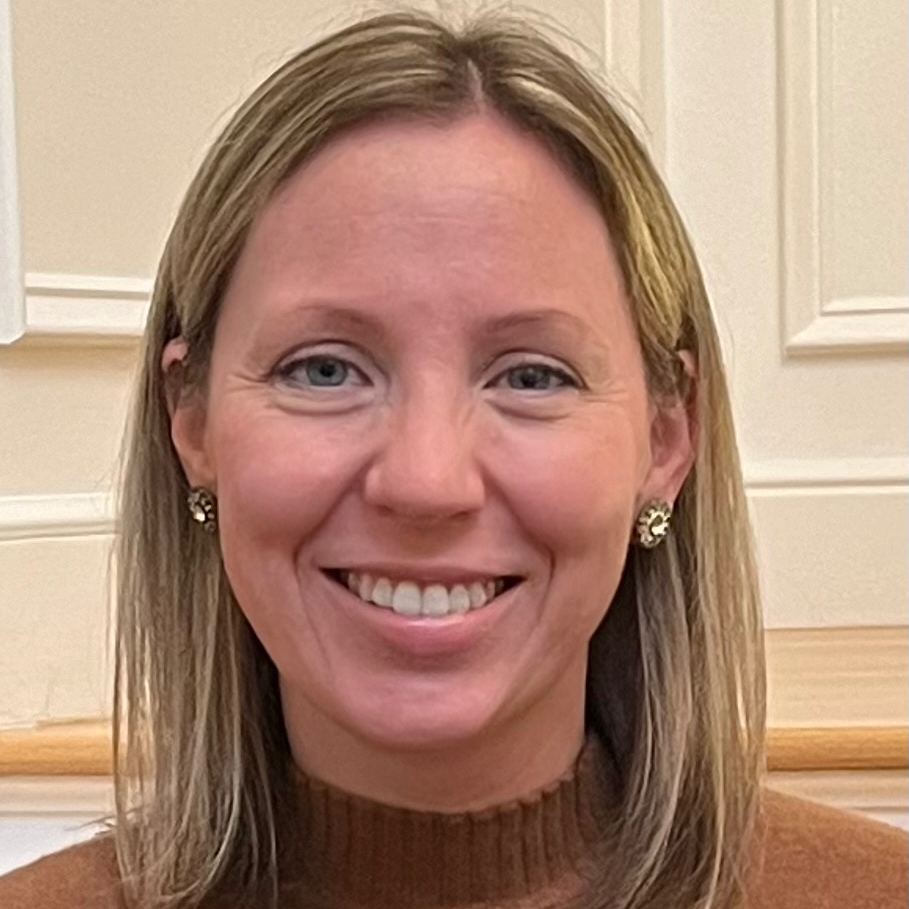
Debra Clooney, PT, DPT
Panelist
Debra Clooney, PT, DPT is a clinical specialist who has been practicing at Spaulding Rehabilitation Hospital in Charlestown, MA for almost 20 years. She has spent most of her time working with patients on the stroke and neurology program and now coordinates the interprofessional student program. She has a strong commitment to teaching and learning and enjoys mentoring new clinicians. She has been an active member of the ethics committee for over 10 years.

Kati Paye, LCSW
Panelist
Kati Paye, LCSW is a clinical social worker on the brain injury unit at Spaulding Rehabilitation Hospital in Charlestown, MA. Kati graduated from the Boston College School of Social Work in 2022 with a focus on global practice. Kati values a collaborative approach to promote health, human rights, opportunity, self-agency, and well-being. She is a member of the Spaulding Ethics Advisory Committee and a volunteer for Massachusetts General Hospital’s Asylum Clinic and Global Disaster Response and Humanitarian Action team.
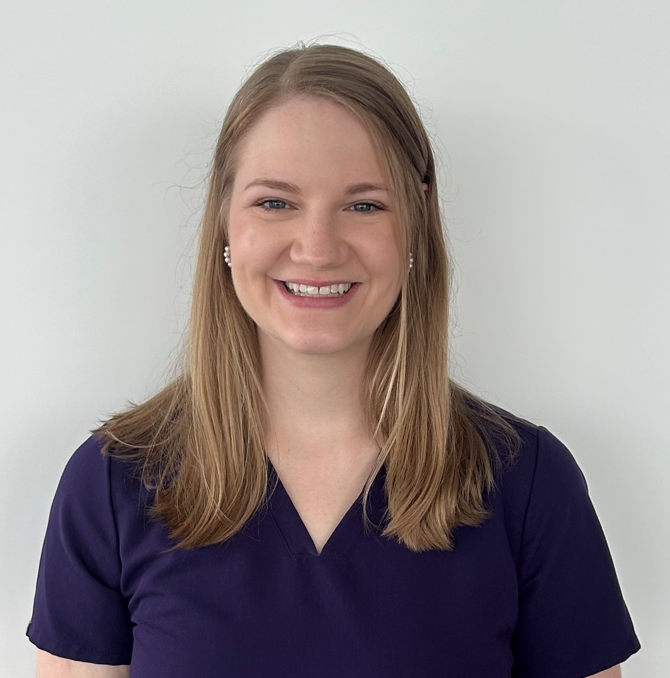
Kara Sheftic, MS, CCC-SLP
Panelist
Kara Sheftic, MS, CCC-SLP earned her master’s in Speech-Language Pathology from Boston University in 2019. Kara spent ~2 years in the skilled nursing facility setting before joining Spaulding Rehab Hospital (SRH). Over the last 4 years at SRH, Kara has spent time as an SLP on both the in-patient stroke and brain injury units. Kara has earned several advanced clinical competencies and mentors graduate student clinicians. In the spring of 2025, Kara began instructing Acquired Cognitive Disorders, a graduate level course within Boston University’s Master of Science in Speech Pathology program. Kara joined Spaulding Ethics Committee in 2024.
Target Audience: Athletic Trainers, Audiologists, Nurses, NPs, Occupational Therapists, Pharmacists, Physical Therapists, Physicians, Physician Assistants, Social Workers, Speech-Language Pathologists
Instructional Level: Introductory
Prerequisites: None
Cancellation Policy: Spaulding reserves the right to adjust components of this program or to cancel the program for unexpected occurrences. Notice of changes or cancellation will be provided expediently. Upon cancellation of a course, a refund for the price paid for the course will be given. A processing fee of $10 may be charged when the registrant provides written notice of cancellation of their attendance less than 7 business days prior to the program date. Tuition is non-refundable if the registrant does not provide notice of cancellation at least 7 days prior to the program date. Spaulding apologizes but will not be responsible for inconveniences incurred due to program changes.
Speaker Disclosures: Elizabeth Hansen is a salaried employee of MGB. She has no other financial or non-financial disclosures to share. Debra Clooney is a salaried employee of MGB. She has no other financial or non-financial disclosures to share. Kati Paye is a salaried employee of MGB. She has no other financial or non-financial disclosures to share. Kara Sheftic is a salaried employee of MGB. She has no other financial or non-financial disclosures to share.

As a Jointly Accredited Organization, MGH Institute of Health Professions is approved to offer social work continuing education by the Association of Social Work Boards (ASWB) Approved Continuing Education (ACE) program. Organizations, not individual courses, are approved under this program. State and provincial regulatory boards have the final authority to determine whether an individual course may be accepted for continuing education credit. MGH Institute of Health Professions maintains responsibility for this course. Social workers completing this course receive 2.0 clock hours for continuing education credits.

In support of improving patient care, MGH Institute of Health Professions is jointly accredited by the Accreditation Council for Continuing Medical Education (ACCME), the Accreditation Council for Pharmacy Education (ACPE), and the American Nurses Credentialing Center (ANCC) to provide continuing education for the healthcare team. Physicians: MGH Institute of Health Professions designates this live activity for a maximum of 2.0 AMA PRA Category 1 Credits ™.
Physicians: MGH Institute of Health Professions designates this live activity for a maximum of 2.0 AMA PRA Category 1 Credits ™. Physicians should claim only credit commensurate with the extent of their participation in this activity.
Physician Assistants: AAPA accepts AMA PRA Category 1 Credits™ from organizations accredited by ACCME.
Nurses: MGH Institute of Health Professions designates this activity for 2.0 contact hours for nurses.
Nurse Practitioners: The American Academy of Nurse Practitioners Certification Board (AANPCB) accepts credit from organizations accredited by the ACCME and ANCC.

Spaulding Rehabilitation is an AOTA Approved Provider of professional development. Course approval ID# 15137. This Distance Learning – Independent course is offered at 0.20 CEUs, Introductory level, Professional Knowledge category. The assignment of AOTA CEU’s does not imply endorsement of specific course content, products or clinical procedures by AOTA.

Spaulding Rehabilitation is recognized as an APTA MA Approved Provider. Information provided should be used within the scope of practice. Even though the APTA MA approval process is in line with criteria for most other states, APTA MA cannot guarantee CEU/CCP approval for use in other states/disciplines, and it is the responsibility of the attendee to verify approval within their own state. This course is offered for 2.0 CEUs pending approval.
This course is offered for 0.20 ASHA CEUs (Introductory level). Spaulding Rehabilitation (SR) is recognized as an approved provider of continuing education by ASHA. ASHA CE Provider approval and use of the Brand Block does not imply endorsement of course content, specific products, or clinical procedures.
Satisfactory completion requirements: To earn ASHA CEUs for this session, participants are required to view the full session, complete the knowledge check, and submit the course evaluation form used by SR to report participant credit for ASHA course number AAVW0186.
The Spaulding Rehabilitation Network (BOC AP#: P2855) is approved by the Board of Certification, Inc. to provide continuing education to Athletic Trainers (ATs). This program is eligible for a maximum of 2.0 Category A hours/CEUs. ATs should claim only those hours actually spent in the educational program.

NCTRC: This continuing education session content is pending approval by the National Council for Therapeutic Recreation Certification (NCTRC). We anticipate we will be able to offer NCTRC credits by April 1st, 2025.

This activity provides 2.0 contact hours (2.0 CEUs) of continuing education credit. ACPE Universal Activity Number UAN JA4008265-9999-26-007-H99-P
NOTE FOR PHARMACISTS: Upon closing of the electronic evaluation, IHP will upload the pharmacy-related continuing education information to CPE Monitor within 60 days. Per ACPE rules, IHP does not have access nor the ability to upload credits requested after the evaluation closes. It is the responsibility of the pharmacist or pharmacy technician to provide the correct information [NABP ePID and DOB (in MMDD format)] in order to receive credit for participating in a CE activity.

MGH Institute of Health Professions has been authorized by the American Academy of PAs (AAPA) to award AAPA Category 1 CME credit for activities planned in accordance with AAPA CME Criteria. This activity is designated for ___ AAPA Category 1 CME credits. PAs should only claim credit commensurate with the extent of their participation.
SR Division of Education and Training CEU facilitators Marianne Savastano, MS, CCC-SLP; Katherine MacKirdy, MSPT, GCS, MPH; Matt Keilty, OTR/L and Kathleen Crosskill, MS, CCC-SLP
